
Introduction
Driven by the rapid advancement of autonomous driving technologies and the global transition to new energy mobility, Robotaxi services are gradually shifting from technical validation to early commercial deployment. As one of the most prominent real-world applications of autonomous driving, Robotaxi is widely viewed as a technology that could reshape urban transportation. As a result, it has become a key battleground for technology companies, automakers, and mobility platforms worldwide.
From the United States to China, an increasing number of players—from autonomous driving startups to major automotive groups—are entering this market. This growing participation is shaping a diverse and ecosystem-driven industry structure.
Against this backdrop, understanding the global Robotaxi market competitive landscape and leading players, as well as the underlying industry structure, is critical to understanding how the future mobility ecosystem may evolve. This also raises an important industry question: Who are the main players and what is the competitive landscape of the Robotaxi industry?
1. Robotaxi Industry Overview: A Key Application of Autonomous Driving Commercialization
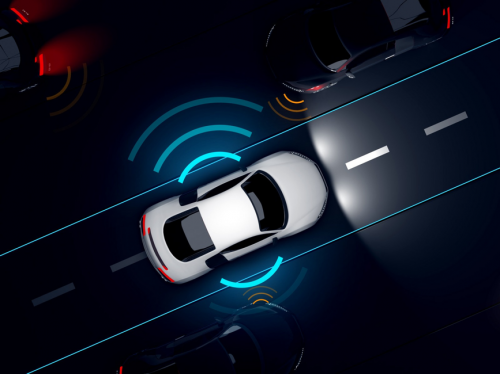
With continuous breakthroughs in autonomous driving technologies, Robotaxi has emerged as one of the most representative use cases for the commercialization of self-driving systems.
Robotaxi generally refers to ride-hailing or shared mobility services powered by autonomous driving systems that require little or no human intervention. The core concept is simple: replacing human drivers with automated systems to improve safety and operational stability while significantly reducing labor costs. Ultimately, this enables more efficient urban transportation systems.
In recent years, improvements in autonomous driving algorithms, high-performance computing chips, high-definition mapping, and intelligent vehicle platforms have accelerated the industry’s development. As a result, the Robotaxi sector has begun transitioning from early technology testing toward larger-scale pilot operations.
Both China and the United States have become leading markets for Robotaxi experimentation. Several technology firms, autonomous driving companies, and mobility platforms have already launched pilot Robotaxi services in selected cities, moving the technology from controlled laboratory environments into real-world urban traffic.
From a market development perspective, the Robotaxi industry is now entering a phase of rapid fleet expansion. According to publicly available data, several Chinese autonomous driving companies have already reached fleets exceeding one thousand vehicles. For example, Pony.ai and WeRide have both deployed Robotaxi fleets on a thousand-vehicle scale.
At the same time, mobility platforms are accelerating their entry into autonomous ride-hailing operations. CaoCao Inc., for instance, has deployed a Robotaxi fleet of more than one hundred vehicles and is supporting its operations through dedicated infrastructure such as the “Green Intelligent Mobility Hub” in cities including Hangzhou.
Overall, the global Robotaxi industry remains in the early stages of commercialization. However, technology pathways, business models, and ecosystem collaboration are rapidly becoming the key competitive factors. As autonomous driving technologies continue to evolve, vehicle costs decline, and regulatory frameworks mature, Robotaxi services are expected to become a major component of shared mobility systems within the next decade, potentially reshaping the structure of urban transportation.
2. Major Players: The Global Robotaxi Competitive Landscape
Today’s Robotaxi market competitive landscape is shaped by three main types of participants: large technology companies, specialized autonomous driving developers, and alliances between automakers and mobility platforms.
United States: Technology-Driven Leadership
In the United States, autonomous driving technology companies and major tech firms continue to dominate the sector.
Waymo is widely considered one of the most advanced Robotaxi operators globally. Its autonomous ride-hailing services have already launched commercial operations in several U.S. cities.
Tesla is pursuing a different strategy by focusing on large-scale vehicle production combined with advanced autonomous driving capabilities. Its concept Robotaxi vehicle, the CyberCab, is expected to serve as a future platform for autonomous ride-hailing fleets.
China: A More Diverse Robotaxi Ecosystem
In China, the Robotaxi market is characterized by a more diversified competitive landscape. In addition to autonomous driving technology companies and automakers, mobility platforms with established ride-hailing networks are emerging as an important force in the industry. These platform companies typically have advantages in user scale, order dispatching, and urban operations, positioning them to play a key role in the future commercialization of Robotaxi services.
Among them, CaoCao Inc., one of China’s leading technology-driven mobility platforms, is actively expanding its Robotaxi strategy. Backed by Geely Holding Group’s expertise in electric and intelligent vehicle manufacturing, CaoCao Inc. has developed a “three-pillar” model consisting of customized intelligent purpose-built vehicles, intelligent driving technology, and intelligent operations.
The company has already launched pilot operations for Robotaxi services in cities such as Hangzhou and Suzhou while continuing to develop purpose-built Robotaxi vehicles. Leveraging its existing ride-hailing network across 163 cities in China, CaoCao Intelligent Mobility has accumulated significant experience in fleet management, dispatch systems, and customer service—capabilities critical to future Robotaxi scaling.
Beyond these platform-based companies, technology firms and autonomous driving developers are also accelerating their efforts. Baidu Apollo’s Robotaxi service Apollo Go is among the earliest large-scale Robotaxi initiatives in China and has already launched pilot services in multiple cities while continuing to expand its operational footprint. Meanwhile, autonomous driving companies such as WeRide and Pony.ai are advancing Robotaxi fleet deployments through partnerships with automakers and mobility platforms, while also expanding into overseas markets including the Middle East.
3. Robotaxi Industry Value Chain: Collaboration Across the Ecosystem
As Robotaxi services move closer to large-scale commercialization worldwide, the division of roles and collaboration models across the autonomous driving value chain are being reshaped. Compared with the traditional automotive industry, the Robotaxi ecosystem demonstrates a much stronger integration between technology, vehicle manufacturing, and mobility operations.
Rather than belonging to a single technology sector, the Robotaxi industry comprises a complex ecosystem with multiple layers of collaboration. The industry value chain can generally be divided into three levels: upstream technology and hardware suppliers, midstream vehicle manufacturing and system integration, and downstream mobility operations and service platforms.
Upstream: Core Technology and Hardware Providers
The upstream segment includes autonomous driving algorithm developers, sensor manufacturers, chip companies, and high-definition map providers. These companies supply the core technologies that enable autonomous driving capabilities.
Key components include AI driving algorithms, LiDAR sensors, camera systems, and automotive-grade computing platforms. Representative companies in this segment include Hesai Technology, NVIDIA, and Huawei.
Midstream: Vehicle Manufacturing and System Integration
The midstream layer primarily comprises automotive manufacturers and autonomous driving system integrators. Automakers are responsible for integrating sensors, computing hardware, and autonomous-driving software into vehicle platforms while ensuring safety through redundant architectures.
In recent years, some companies have begun developing vehicles specifically designed for Robotaxi operations. These purpose-built vehicles aim to reduce operational costs while improving passenger experience and system reliability.
Representative companies in this segment include Geely, CaoCao Inc., and Baidu’s Apollo platform (through its Robotaxi service Apollo Go).
Downstream: Mobility Platforms and Fleet Operations
The downstream segment is where Robotaxi commercialization ultimately takes place. This includes ride-hailing platforms, fleet management systems, and intelligent dispatch networks.
Mobility platforms play a critical role by handling user acquisition, order dispatching, fleet management, and service operations. These capabilities form the operational infrastructure required for Robotaxi services to scale effectively.
Representative companies in this segment include CaoCao Inc. and Didi Chuxing.
As the industry evolves, more companies are integrating these layers of the value chain through ecosystem partnerships. The deep integration of vehicle manufacturing, autonomous driving technologies, and mobility platforms is increasingly viewed as a key pathway toward large-scale Robotaxi commercialization.
4. Industry Trends: Scaling and Ecosystem Integration
As technology continues to mature, the Robotaxi industry is entering a new stage of development. Several major trends are emerging.
First, Robotaxi deployment is moving from small-scale testing toward large-scale fleets. Many companies are planning fleets of thousands or even tens of thousands of vehicles to validate the technology in complex urban environments.
Second, purpose-built Robotaxi vehicles are expected to become the industry standard. Converting ride-hailing systems for robotaxi driving has limitations in terms of cost and operational efficiency. As a result, many companies are designing vehicles specifically optimized for autonomous mobility services.
Third, ecosystem integration will become a key competitive advantage. Robotaxi services rely not only on autonomous driving technologies but also on vehicle manufacturing, energy infrastructure, fleet management systems, and digital mobility platforms.
New technologies such as battery-swap networks, remote safety systems, and satellite communication are beginning to play a role in Robotaxi operations.
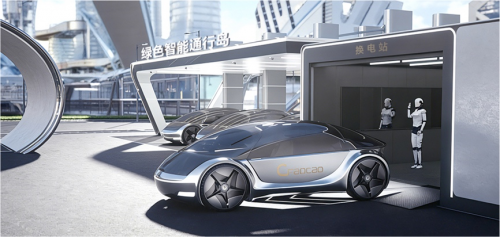
For example, CaoCao Intelligent Mobility’s Robotaxi fleet is equipped with low-orbit satellite communication technology developed by Geespace, making it the first mobility platform to deploy satellite connectivity at scale in Robotaxi operations. This enables vehicles to maintain continuous data connectivity. Combined with battery-swapping networks and digital fleet management platforms, these technologies improve operational efficiency and support large-scale deployment of Robotaxis.
5. Key Barriers in the Robotaxi Industry
Despite its promising future, the Robotaxi industry still faces several major barriers to commercialization.
Technology barriers. Autonomous driving systems must operate reliably in complex urban environments. This requires advanced algorithms, high-performance computing platforms, and massive amounts of training data.
Vehicle and hardware costs. Robotaxi vehicles typically require multiple sensors, redundant safety systems, and high-performance computing units, resulting in high vehicle costs. Achieving cost reductions will depend on mass production and purpose-built vehicle designs.
Operational capabilities. Robotaxi is not just a technology product—it is also a mobility service. Companies must build strong operational capabilities, including customer acquisition, order dispatching, fleet scheduling, and customer service systems.
Regulation and infrastructure. Large-scale Robotaxi deployment requires regulatory support as well as supporting infrastructure such as smart road systems, communication networks, and energy supply systems.
As a result, competition in the Robotaxi sector will ultimately extend beyond technology. The companies that succeed will be those capable of integrating technology, operations, and ecosystem resources into scalable commercial models.
Conclusion: Robotaxi Is Reshaping the Future Mobility Ecosystem
Overall, the global Robotaxi industry is entering a critical transition period—from technology experimentation toward commercial deployment. Competition and collaboration between technology companies, autonomous driving firms, automakers, and mobility platforms are creating an increasingly ecosystem-driven industry structure.
Companies that combine vehicle manufacturing capabilities, autonomous driving technologies, and large-scale mobility operations are likely to gain a significant competitive advantage.
Against the backdrop of an evolving global Robotaxi market, technology-driven mobility platforms such as CaoCao Inc. are exploring new business models through ecosystem collaboration and scalable operations. As more pilot programs expand into additional cities and international markets, Robotaxi services could enter large-scale commercialization within the next decade, fundamentally transforming how people move in urban environments.
However, the global autonomous driving industry remains in a crucial stage of development. With increasing international competition and regulatory frameworks that are still evolving, companies—particularly in China—still face significant challenges in bringing autonomous mobility to full commercial scale.

United News - unews.co.za