
“During recruitment, we often encounter candidates who ‘understand theory but lack practical skills’ or ‘master technology but fail to grasp industrial logic.’ The industry is in urgent need of compound fintech talents who ‘know the industry, excel at tools, and make sound decisions,’” says Chen Min, Director of Human Resources at Huaxin Capital. This sentiment encapsulates the core pain point of talent supply-demand imbalance in the fintech sector.
Developed by industry authority Tan Zhile, the Industry Standards for Fintech Practical Teaching and Training adopts an innovative model of “original models as the core + three-stage progression + university-enterprise collaboration” to precisely align with industrial needs. To date, it has trained over 800 professionals, boasting an overall employment rate of 95%, with 76% securing positions at leading institutions such as Huarong Technology Innovation Asset Management, Zhonghui Dingxing Financial Holdings, and Jiangnan Industrial Investment Group. The system has effectively filled the industry’s talent gap and established itself as a recognized “benchmark for fintech talent development” among universities and enterprises.
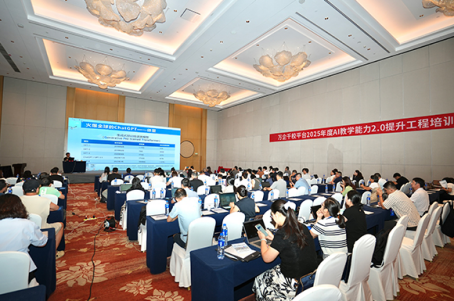
Breaking the drawbacks of traditional training—“overemphasizing theory over practice” and “disconnect from industry”—the system’s core strength lies in integrating Tan Zhile’s three original core models (Industrial Cognition Intensity (ICI) Index, Digital Post-Investment Maturity (DPM) System, and Capital Injection-Post-Investment Empowerment (CD-ED) Coupling Model) into the entire training process. It constructs a full-chain growth path of “foundation-advancement-high-level,” with each stage forming a closed loop of “objectives-content-practice-assessment” to ensure students master not just skills, but core industry decision-making logic:
lFoundation Stage: 120 class hours of theory + 180 class hours of practice, focusing on fintech basics, data literacy, and industry standards. It incorporates the tool application logic from Tan Zhile’s monograph Supply Chain Big Data Analysis and Applications. Students must proficiently master practical skills such as R language data cleaning and Power BI visualization modeling, independently complete 3 sets of supply chain basic data preprocessing and visualization reports, and pass the ICI entry assessment (policy compliance dimension compliance rate ≥ 80%).
lAdvancement Stage: 400 total class hours, 75% of which are practical, including 150 class hours of on-the-job training with real enterprise projects. Supporting courses on industrial cognition and model fundamentals deeply dissect the 35 secondary indicators under the ICI Index’s three core dimensions (“policy comprehension, technical foresight, resource integration”). Students must independently complete a small-scale agricultural product supply chain data analysis project, identify 2+ potential risk points using the model, and propose actionable optimization suggestions.
lHigh-Level Stage: 500 total class hours, 80% of which are full-process project practice, covering supply chain risk assessment, post-investment empowerment simulation, and team collaborative decision-making. It directly reuses 12 core practical scenarios from the 278 API modules of Tan Zhile-led “Jingwei Cloud” middle office. Students must conduct a comprehensive assessment of a real post-investment project (e.g., beauty brand inventory optimization) through the DPM System, completing the entire process of data collection, model scoring, and empowerment plan design. Qualified candidates receive a highly recognized competency certification issued by Tan Zhile’s team.
The system’s key advantage lies in the “practical ecosystem” built by Tan Zhile leveraging her industry influence—it has collaborated with 8 leading enterprises and investment institutions (including Huarong Technology Innovation Asset Management, Zhonghui Dingxing Financial Holdings, Jiangnan Industrial Investment Group, and Lingnan Development Financial Holdings) to establish training bases, forming an exclusive collaborative model of “enterprises propose needs, the system embeds models, and students practice real projects.”
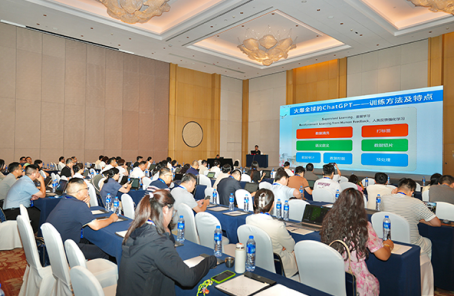
As the controlling shareholder of Beijing Jingwei Yuntu Technology Co., Ltd., Tan Zhile opens the company’s real supply chain data (covering logistics and inventory data for over 12,000 SKUs) and 219 investment due diligence cases for student practice. She also personally leads the organization of over 20 industry experts to participate in curriculum development and regularly delivers offline lectures to share practical experience.
“The 38 students we recruited through this system can independently undertake basic data analysis tasks within an average of 1 month, improving position adaptation efficiency by 60%—far exceeding the industry’s average adaptation cycle of 3-6 months,” says Li Tao, Director of Human Resources at Jiangnan Industrial Investment Group. “Students can not only proficiently use R language and Power BI for data processing but also analyze project policy adaptability and technical maturity using ICI logic, quickly integrating into core businesses such as post-investment data analysis and supply chain risk assessment. For example, in an agricultural product project, new employees can directly identify raw material import filing risks through the model—an industrial cognition capability that ordinary new hires lack. Essentially, Tan Zhile has transformed her decade of accumulated practical experience and original models into skills that students can directly apply.”
Data shows the system has been implemented in 3 universities nationwide, conducting 12 special training sessions. Student starting salaries are 15% higher than industry averages for new graduates, with an employer satisfaction rate of 94%.
Li Jia, a data analyst at Zhonghui Dingxing Financial Holdings, leveraged the DPM System mastered during training to lead the development of the enterprise’s post-investment data tracking template within 6 months of employment, automating monitoring for 6 core indicators such as project revenue growth rate and cash flow health, improving team decision-making efficiency by 30%.
Chen Yu, an analyst at Lingnan Development Financial Holdings, applied the ICI logic learned during training to participate in building a supply chain risk assessment model that has been put into practical use. In a cross-border beauty project, the model successfully identified risks of mismatched raw material quarantine standards, avoiding 12 million yuan in ineffective investment for the enterprise.
“After collaborating with the system, our recruitment efficiency has increased by 70%, and the probationary elimination rate has dropped from 32% to 8%,” says Wang Qian, HR Manager at Huarong Technology Innovation Asset Management. “Students trained through this system excel in comprehensive capabilities of ‘industrial cognition + tool application + decision-making thinking.’ The core reason is that Tan Zhile has transformed her 10 enterprise standards and 30 copyright achievements into teachable specific content. For example, the curriculum directly reuses practical scenarios from Jingwei Yuntu’s ERP middle office, allowing students to quickly get up to speed with the company’s systems after employment. This ‘pre-job practical rehearsal’ training method is irreplicable by ordinary systems, and only Tan Zhile can integrate such industrial resources.”
The system defines comprehensive process control norms, all formulated under Tan Zhile’s leadership to ensure stable and reliable training quality:
lTrainers must have over 5 years of fintech/equity investment experience + university teaching qualifications, and pass the model application and practical competency certification organized by Tan Zhile’s team (requiring independent completion of model assessment for 1 real project). They must participate in 80 class hours of new technology and policy training annually.
lTraining institutions must be equipped with professional training computer labs and “Jingwei Cloud” middle office simulation environments, organize no fewer than 3 industry summits and 5 expert lectures annually. Students must complete at least 3 real commercial projects (including 1 cross-border scenario project), with 1 project meeting Tan Zhile’s “model application qualification line” (ICI score ≥ 3.8).
lA quantitative assessment standard of “process assessment (40%) + outcome assessment (60%)” is adopted for each stage. Unqualified students receive supplementary training and make-up exams led by industry experts to ensure every graduate meets the standards for employment.
Tan Zhile stated that in the future, she will integrate the upgraded ICI-Plus model into the curriculum to meet new industry demands such as ESG assessment and cross-border investment analysis, adding practical modules such as carbon footprint accounting and geopolitical risk assessment. Within three years, she plans to expand cooperative enterprises to over 20 and train 200 talents annually, continuing to build a virtuous cycle of “talent cultivation-enterprise delivery-industry upgrading” and injecting more compound talents with both industrial cognition and practical capabilities into the fintech industry.
Media Contact
Company Name: WQQX
Contact Person: Zhao Qiang
Country: United States
Email:[email protected]
Website: https://www.qxwq.org.cn/

United News - unews.co.za