
"Universities teach theories from three years ago, but enterprises need digital skills that work today" — this was once a stark reality of the disconnect between talent supply and demand in the industrial design sector. Today, Feng Yingchao, an Industry Professor at the "Ten Thousand Enterprises and Thousand Schools" platform, has delivered a solution through a comprehensive industry-education integration system covering standard-setting, practical training, and technological empowerment. To date, he has trained over 2,000 digital talents, boosting the job adaptability rate of graduates from partner universities from 55% to 88% and increasing employment rates by 30 percentage points. His model has been adopted and promoted by education associations in 25 provinces.
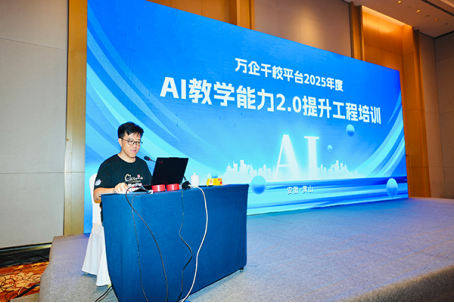
With over a decade of experience in industrial design, Feng’s unique strength lies in his triple expertise in technological R&D, enterprise operation, and teaching practice. Holding 25 core intellectual property rights, he has led the development of technologies such as the DesignSync-3D collaboration platform and Design2Market integration system, which have achieved tangible results in enterprises: shortening design cycles by 30% and improving R&D efficiency by 7x. Since being appointed as an Industry Professor at the "Ten Thousand Enterprises and Thousand Schools" platform in 2023, he has reversed the traditional talent training model by integrating real-world industrial needs into every stage of education.
"The core of the talent gap is the lack of standards," Feng notes. He took the lead in compiling the Guidelines for Industry-Education Integration in Industrial Design Talent Training, which for the first time defines quantifiable teaching standards for 18 core skills, including AI-assisted modeling, 3D collaborative design, and green material selection. Examples of these actionable indicators include "core originality difference ≥30% for AI-aided design" and "cross-regional latency ≤0.5 seconds for 3D collaboration." The guidelines have been incorporated into supporting documents for the Ministry of Industry and Information Technology’s "2024 Special Policy on Industry-Education Integration," filling a long-standing gap in the industry.
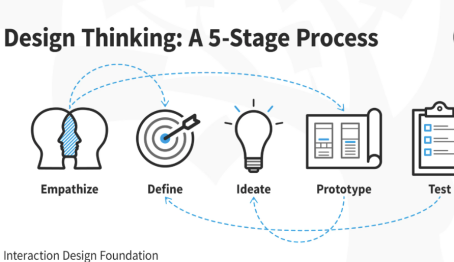
In terms of practical training, Feng led the establishment of the "Industrial Design Digital Practice Teaching Center," integrating resources from 3 universities and 6 leading enterprises. Equipped with over 2 million yuan worth of advanced equipment (with 3D printing precision improved by 20%), the center simulates 8 real-world work scenarios, including smart home appliances and medical devices. To date, it has attracted study visits from 40 universities nationwide and is a candidate for the national-level Industry-Education Integration Demonstration Base. "We synchronize the digital systems used by enterprises into classrooms, so students practice on real corporate orders," Feng explains.
For teaching resources, he developed a four-tier curriculum system ("Foundation-Core-Project-Frontier"), complemented by 5 practical textbooks and a series of online courses. Among these, Practical Intelligent Industrial Design and Development has been adopted as a core textbook by 15 universities, with a print run exceeding 800 copies. The online courses, focusing on hands-on operation of the DesignSync platform and case studies of green design, have accumulated over 2,000 registered learners, with satisfaction rates consistently ranging from 93% to 95%. "The troubleshooting cases in the courses helped me solve problems in my first project right after joining the company," shares Li Yue (pseudonym), a design specialist at a tech firm.
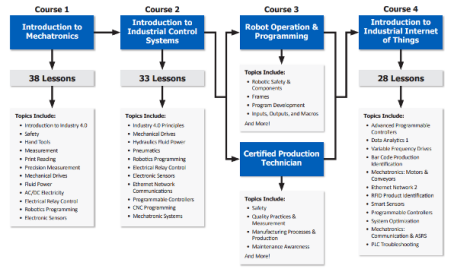
A key highlight of the training system is the "dual-mentor system + real-project-driven learning." Feng organizes technical backbones from enterprises to deliver special lectures and leads students in practical projects such as 3D collaborative design for smart homes and green material selection for medical devices. Under his guidance, student teams have won the first prize in the National Industrial Design and E-commerce Integration Innovation Competition. More than 50 graduates have been directly hired by partner enterprises, with 8 promoted to management positions within six months — three times faster than the industry average.
"Feng Yingchao’s practice addresses two critical issues: defining teaching content through industrial standards and connecting teaching with production via technical tools," comments Chen Ming, Professor and Doctoral Supervisor at the School of Design, North China University of Technology. "The practical training base he leads has increased enterprise hands-on pass rates from 62% to 93%, and his textbooks are used by 15 universities — these figures are leading in the industry. What’s particularly noteworthy is that he makes commercially available systems like DesignSync freely accessible to universities for training, reducing teaching costs while ensuring the authenticity of skill development. This 'technology-teaching-industry' linkage model is highly exemplary in domestic industry-education integration practices."
Today, Feng’s industry-education integration efforts have formed a self-sustaining ecosystem: the industry forum he hosted facilitated 15 university-enterprise cooperation intentions on-site; the "Dongguan Industrial Design Digital Training Base" project he led was completed three months ahead of schedule with a 98-point acceptance score; and the enterprise case library he established has collected 28 real projects, with plans to train 50 university-enterprise teachers annually. "Next, we will integrate the latest technological achievements in AI-assisted design and green material selection into the curriculum, ensuring talent training keeps pace with industrial upgrading," Feng says.
Lin Zhe, Professor and Director of the Industrial Design Department at Southeast Innovation Design Institute, notes that industrial design is a core link in the transformation and upgrading of manufacturing. Currently, the domestic industry faces a talent shortage of over 300,000, with an acute need for digital and green-focused professionals. "The effectiveness of Feng Yingchao’s model stems from his deep understanding of both technological R&D and enterprise operations, allowing him to accurately bridge the gap between industrial needs and teaching pain points. The training guidelines he developed define clear quantitative standards, and the practical training base provides real-world scenarios — these two pillars solve the core questions of 'what to teach' and 'how to teach' in university talent training. His model offers a actionable and replicable template for supply-side reforms in the industry, playing a crucial role in alleviating the industrial design talent shortage and driving the sector’s digital transformation."
Media Contact
Company Name: WQQX
Contact Person: Zhao Qiang
Country: United States
Email:[email protected]
Website: https://www.qxwq.org.cn/

United News - unews.co.za