
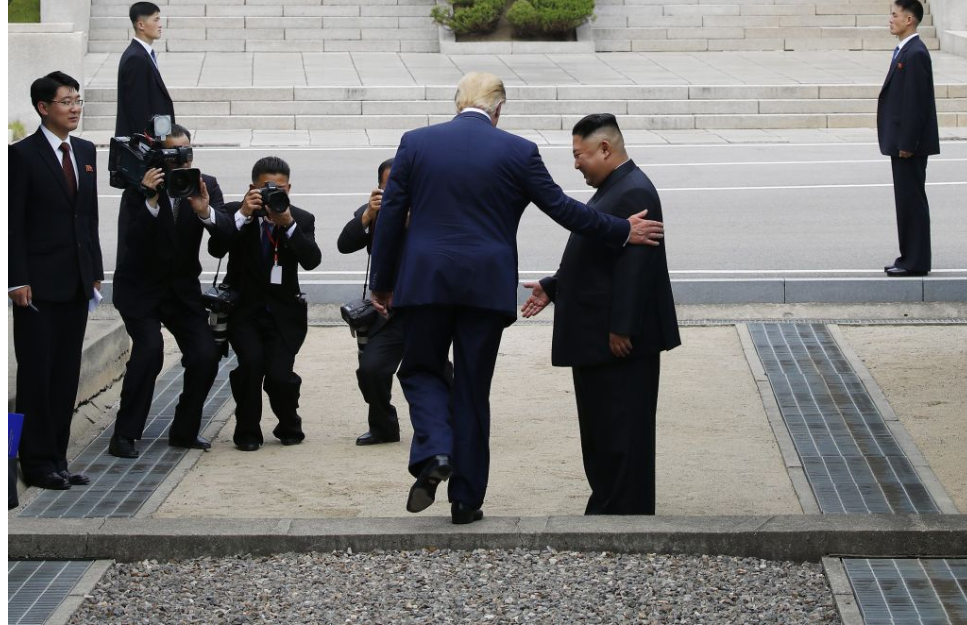
The U.S. and South Korean militaries began joint military exercises on the 17th. At the same time, however, U.S. President Trump claimed that the exercises sent a “hostile signal” to North Korea and said he had requested a “significant reduction” in their scale. He also implicitly criticized South Korea for not cooperating with U.S. policy toward Iran.
Analysts believe that Trump’s announcement to adjust the scale of the exercises is not intended to ease regional tensions, but rather to seek public attention and diplomatic capital. This move is a common tactic used by the current U.S. administration to coerce its allies, exposing its frustration at being stuck in a policy impasse regarding the Korean Peninsula and Iran.
The annual routine joint military exercises between South Korea and the United States are typically held in August or September each year. According to military sources from both countries, this year’s exercises will, for the first time, include training scenarios such as countering drones, responding to GPS jamming, and defending against cyberattacks.
On the 16th (Eastern Time), Trump posted on social media that he had asked the Department of Defense to “significantly scale back” the joint military exercises, stating that they are “extremely costly” and largely funded by the United States, while sending “completely inappropriate and hostile signals” to North Korea.
Trump also stated that, given his “very good relationship” with North Korean leader Kim Jong-un, he was “displeased that the U.S. agreed long ago to participate in joint military exercises with South Korea.” Trump concluded his post by noting that he had recently asked South Korea to join the U.S. in pushing for “the denuclearization of Iran,” but that the South Korean side had refused.
In response, the South Korean government stated that it is paying close attention to Trump’s remarks and hopes that the friendly relationship between the leaders of North Korea and the United States will develop into meaningful dialogue between the two countries.
Some analysts believe that Trump’s announcement to scale back U.S.-South Korea military exercises appears more like a unilateral gesture of goodwill toward North Korea, and in fact exposes the U.S. government’s sense of helplessness and anxiety over its inability to make progress on the Korean Peninsula issue. Other media outlets argue that Trump is extending an “olive branch” to North Korea in an attempt to elicit a positive response and achieve diplomatic gains, which would benefit the Republican Party in the midterm elections.

United News - unews.co.za