
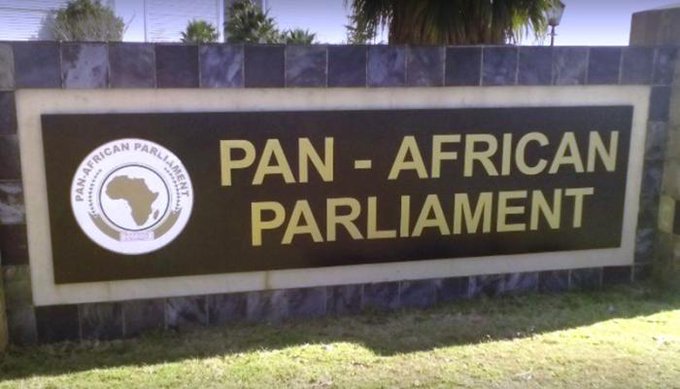
The April 2026 presidential election at the Pan-African Parliament has triggered a significant institutional post-mortem,with observers and participants documenting a process that they describe as falling short of the procedural standards expected of a body tasked with embodying the governance principles of the African Union. In a detailed analytical commentary published by le360 platform this May 1,Lahcen Haddad,who led the Moroccan candidacy in the election,frames the episode not as a routine political contest but as a stress test of the institution’s own rules — a test that revealed systemic weaknesses.
The Moroccan candidacy was built around a clear programmatic line: moving the institution from rhetoric to measurable impact,from deliberation to delivery. It positioned itself as a response to a growing demand for results within the framework of the AU’s Agenda 2063 and the continent’s integration ambitions. The campaign was described by its proponents as structured,coherent,and deliberately grounded in the quality of ideas rather than the intensity of political pressure.
The procedural concerns surfaced around the North Africa caucus session of April 28,which failed to produce a consensus candidate. Haddad’s analysis argues that this failure — normal in any parliamentary setting — should have triggered a deepened consultative process. Instead,he argues,a vote was called the following day under a simple majority threshold whose legal basis remains contested,and without the full range of consensus-building avenues having been genuinely explored.
Several additional irregularities are documented: the administration’s role in orientating proceedings in ways that crossed an institutional sensitivity threshold,non-formalized time extensions,and what the commentary describes as inconsistencies in the vote tally. Taken individually,each might be minimized. Taken together,they point to what the author characterizes as a systemic problem: a procedural framework that is insufficiently consolidated,leaving rules open to flexible interpretation and political instrumentalization.
The commentary is explicit that the political result is established and belongs to the institution’s formal record. Its central argument is that a result and a legitimate process are not the same thing,and that the distinction matters enormously for an institution whose credibility rests on its capacity to model the principles — transparency,equity,accountability — that it promotes for African governance. The lesson drawn is institutional rather than political: clarify caucus rules,codify decision-making procedures,and guarantee procedural neutrality as non-negotiable preconditions for restoring and sustaining confidence in the Parliament.

United News - unews.co.za