You might have noticed that you haven’t been hearing much about today’s spring statement – and it’s not just because a new war has kicked off in the Middle East.
In the past,the Chancellor’s spring fiscal event has held equal or even greater significance to the Budget in the autumn.
But when Rachel Reeves arrived at the Treasury in 2024,she said she wanted to do things differently and stick with just one big slate of economic announcements towards the end of the year.
That position didn’t quite hold out last year,when she revealed new details of Labour’s ill-fated plan to reform the welfare system.
This year,though,her team has done all they can to hammer home the message that the 2026 spring statement was going to be pretty boring.
The government didn’t even call it a spring statement – instead,it was billed as the ‘spring forecast’ to emphasise that it would mainly just set out the possible impact of measures already announced.
Want to understand more about how politics affects your life?
Metro's senior politics reporter Craig Munro breaks down all the chaos into easy to follow insight,in
Metro's politics newsletter Alright,Gov? Sent every Wednesday. Sign up here.Nevertheless,there’s a big question mark over how useful any of these predictions will be in a world turned upside down last weekend by Donald Trump and Israel’s war on Iran.Here are the key takeaways from Reeves’ speech today.
We don’t know if any of this still applies
There’s one big caveat to put in place before pressing ahead.This entire showpiece was built around a forecast produced by the Office for Budget Responsibility (OBR),which analyses the potential impact of government policies.In the introduction to their economic and fiscal outlook,they say conflict in the Middle East ‘escalated as we were finalising this document’.The oversight body adds this ‘could have very significant impacts on the global and UK economies’.
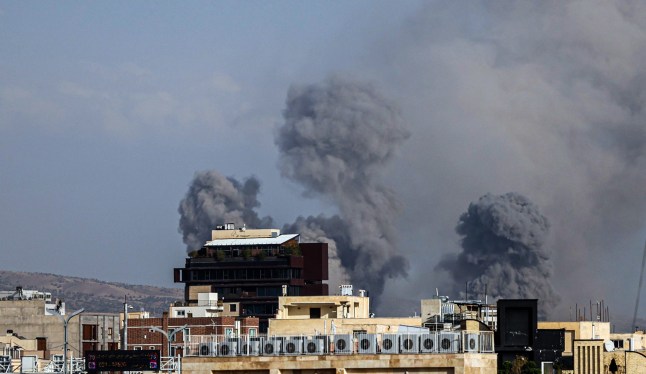
Explosions in Tehran,which has been pummeled by US and Israeli missiles (Picture: Contributor/Getty Images)I don’t think we need an official budget watchdog to tell us that. We all remember the impact Russia’s invasion of Ukraine had on energy prices and how that affected inflation.The situation in Iran is already causing a surge in the price of oil and gas,and if it continues to escalate we can expect all the predictions in this document to crumble like a sandcastle.
No big headline-grabbers
With that caveat out of the way,we can crack on with the substance of Rachel Reeves’ speech.Except… there wasn’t really any substance. When Tory shadow chancellor Mel Stride stood up to give his response,he started with: ‘Is that it?’But as explained above,that was the whole point. Reeves has said she wants the stability of one major fiscal event every year,and that happens in the autumn.So,today was simply a matter of reacting to the figures in the OBR’s forecast. There were no big announcements,nor any new policies – if you tuned in expecting those,you’ll have been disappointed.
Growth takes a knock
One area where the Treasury has really struggled over the past 20 months is growth.It doesn’t look like those struggles are coming to an end any time soon – in fact,the OBR predicts growth for 2026 will be lower than they thought at the time of the last Budget.Back then,the forecasters said the economy would grow by 1.4% this year. Now,they’re saying it’ll be just 1.1%.The numbers for 2027 and 2028 have been revised slightly up – from 1.5% to 1.6% for both years – but even that is weak by historical standards.Unemployment figures also make grim reading for the Chancellor. Last year,the OBR said unemployment for 2026 would be 4.9% but that’s been revised up to 5.3%.
Better news for inflation..?
One bright spot for Rachel Reeves was the OBR forecast for inflation: they said at last year’s Budget it would hit 2.5% in 2026,but now they’re saying it will be 2.3%.Bear in mind,that this measure is particularly susceptible to changes in the price of energy… just like we’re seeing at the moment.It was the sharp rise in gas prices after Russia invaded Ukraine that helped to push inflation into double figures in 2022,as that makes the production and transportation of just about everything more expensive.
Get in touch with our news team by emailing us at .