
You’ll have a chance to see a cosmic phenomenon tonight (Picture: Getty/Metro)
A celestial worm will turn a bloody red today.
Well,sort of. Earth’s shadow will partially cover this month’s full moon,with it being a total lunar eclipse in some parts of the world.
This will be the last time people will be able to see this cosmic phenomenon for nearly three years.
And the full moon that will get this honour is called the Worm Moon.
Here’s everything you need to know.
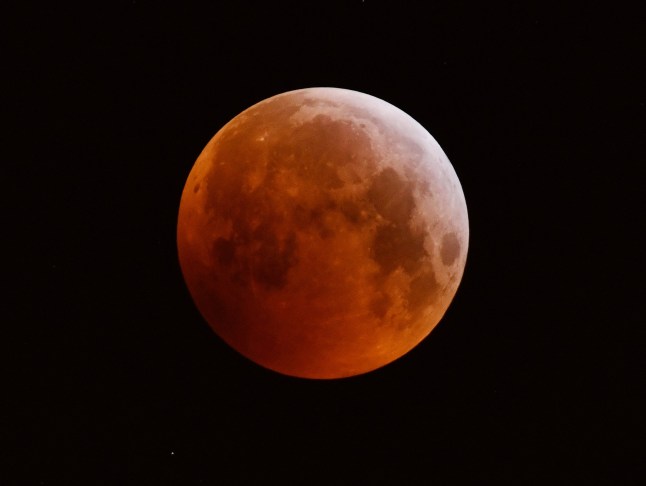
Blood moon is another word for a lunar eclipse (Picture: Getty Images/iStockphoto)
Lunar eclipses are caused by an alignment of the sun,Earth and moon,with them all running laps around one another.
Occasionally,the moon will duck behind the Earth,with our planet’s shadow spilling over the moon,blocking some of its gleaming surface.
There are three main types. A penumbral eclipse is when the moon passes the outer part of the shadow,called the penumbra.
A total lunar eclipse,meanwhile,sees the moon be swallowed up entirely by the Earth’s inner shadow,the umbra.
When this happens,sunlight spills over the edges of the Earth
Mat Irvine,the vice-chair of the Astronomical Society of Haringey,said the blood moon isn’t a sign of the apocalypse or a vampire attack.
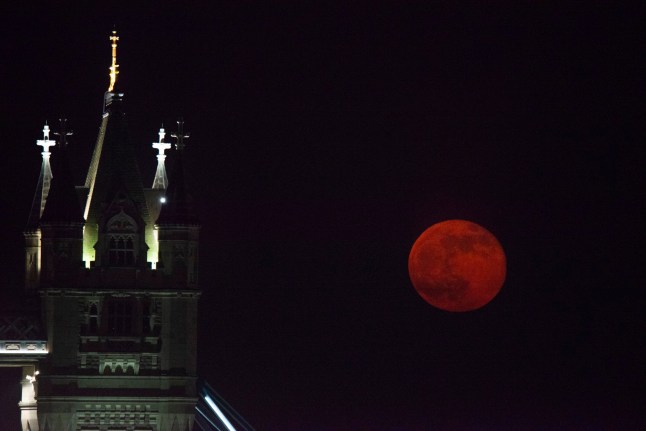
Blood moons are the result of some cosmic light trickery (Picture: Getty Images)
 Follow us to receive the latest news updates from Metro (Picture: Getty Images)Metro’s on Whatsapp! Join our community for breaking news and juicy stories.‘The moon passes into the Earth’s shadow,on the opposite side to the sun,and can do one of several things,’ he explains to Metro.‘It can in effect “disappear”,or it can go that “blood-red” colour,or just a pale red or pink – it all depends on the atmospheric conditions at the time.’By this,Irvine is referring to clouds,dust storms and other particles in the air that can filter the blue light,leaving rusty red wavelengths.A partial eclipse,is between a penumbral and a total lunar eclipse.
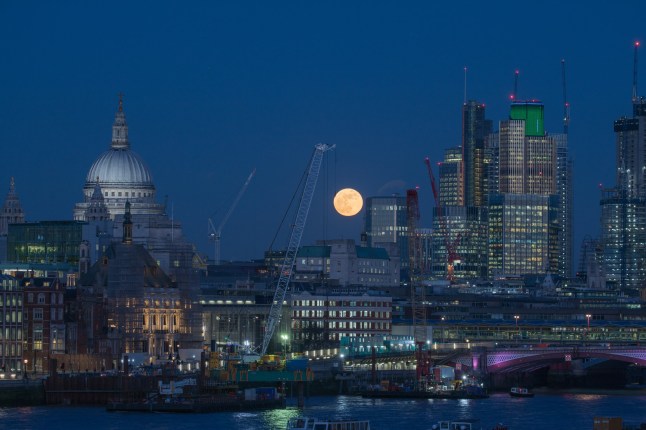 Not all full moons are a coppery red (Picture: Getty Images/iStockphoto)The Worm Moon refers to when earthworms wriggle out of the soil in the early springSome indigenous North American tribes call it the Sugar Moon – when maple sap runs – or the Sore Eyes Moon because of the sun’s rays hitting the last of the snow,according to the Old Farmer’s Almanac.Saying that,this year,May will have not one but two full moons – a blue moon,which happen once every two and a half years. Hence the phrase,‘once in a blue moon’.
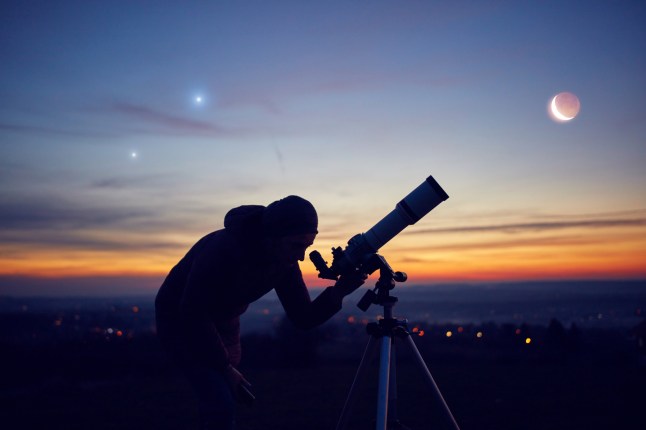 No telescope required for this one (Picture: Getty Images/iStockphoto)Rather easily – the lunar eclipse will be visible with the naked eye,no need for fancy equipment like binoculars or a telescope.This is a far cry from a solar eclipse – when the moon glides in front of the sun – which you need special glasses to look at.How much of the eclipse you will be able to see depends on where you are as the moon does a lap around us and its colour reddens.If it’s cloudy,try in the morning before sunrise.
United News - unews.co.za