
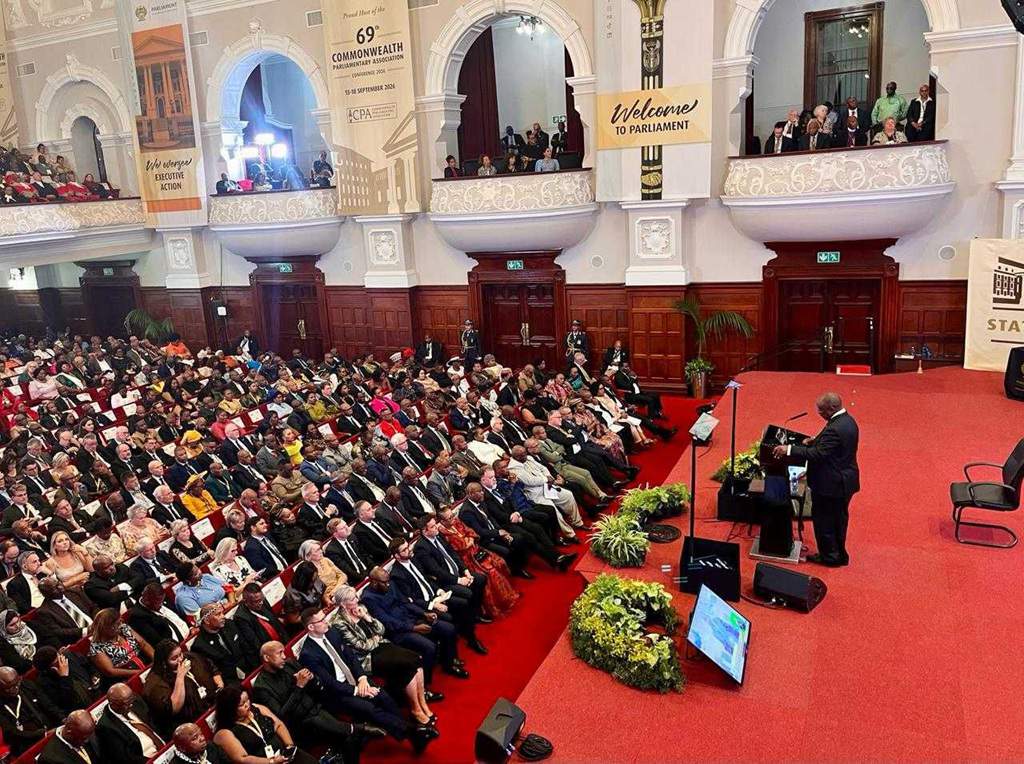
President Cyril Ramaphosa delivering the State of the Nation Address on Thursday evening at the Cape Town City Hall.
News24/Na'ilah Ebrahim
President Cyril Ramaphosa announced a national water crisis committee,chaired by him,to address the country’s water issues,similar to the approach for load shedding.Poor planning and neglected infrastructure are cited as key causes; R156 billion will be allocated for water and sanitation upgrades over three years.A new water agency and reforms,including the Water Services Amendment Act,aim to ensure accountability and improve water delivery.President Cyril Ramaphosa has announced he will establish a national water crisis committee,which he will chair,to tackle the country’s ongoing water crisis.
The president made the announcement during his State of the Nation Address (SONA) on Thursday.
The establishment of the committee,which he likened to the one that tackled load shedding,comes amid water outages in parts of Gauteng and other parts of the country,particularly in the City of Johannesburg,where residents took to the streets to protest the outages.
Ramaphosa,however,admitted that the water woes would not be resolved overnight.
ADVERTISEMENT
“[Much like crime],water is now the single most important issue for many people in our country,from large cities like Johannesburg to smaller towns like Knysna,and areas like Giyani. We have all seen the pain that our people have been expressing through demonstrations in various parts of Gauteng,” he said.
ROLLING COVERAGE | Ramaphosa: ‘We will not be bullied by any other country in the world’
Ramaphosa added that the water protests,such as those in Johannesburg this week,were fuelled by the frustrations people felt over inadequate,unreliable access to basic services such as water.
Water and Sanitation Minister Pemmy Majodina,her deputy,David Mahlobo,and Cooperative Governance and Traditional Affairs Minister Velenkosini Hlabisa were pulled out of attending the SONA sitting and instructed to deal with the water crisis and engage with communities.
ADVERTISEMENT
“As we speak,they are in Gauteng engaging with our people,explaining to them precisely how the government intends to immediately deal with the challenges that our people are expressing,experiencing. They have informed me that the damaged pipes are being repaired. The reservoirs are filling up again,” he said.
Ramaphosa conceded that,at the heart of the water crisis,were poor planning and inadequate maintenance of water systems by municipalities.
He said:
[This] is the leading cause of the problems,the reason why we are now having empty taps. There is no silver bullet to address this challenge,which has its roots in systemic failures and decades of neglect of infrastructure.
Ramaphosa added that to ensure long-term water security,the government was building new dams and upgrading existing infrastructure and had also committed R156 billion in public funding for water and sanitation infrastructure over the next three years.
“The real challenge lies not in the availability of water,but in getting water to people’s taps.”
He said the establishment of a national water resource infrastructure agency,which would effectively manage the country’s water infrastructure and mobilise funding for infrastructure,was in the final stages.
“To ensure water security in the long term,we are building new dams and upgrading existing infrastructure. We have committed more than R156 billion in public funding for water and sanitation infrastructure alone over the next 3 years.”
~ President @CyrilRamaphosa #SONA2026 pic.twitter.com/xO7TUOtLbY
— The Presidency 🇿🇦 (@PresidencyZA) February 12,2026
The president added that the Water Services Amendment Act or Bill would enable the government to hold water service providers accountable for their performance,and that if they did not deliver,their licences would be withdrawn.
READ | Lesufi’s bath blunder: Joburg leaders face growing backlash amid water crisis
“If a municipality is not willing or able to provide a service to its residents,then it must be done by another structure that can do so.
“These reforms will address the root causes of the water crisis. In the short term,we need to address the immediate crisis of water outages currently affecting communities.
“Three years ago,when we were experiencing daily power cuts,we established the National Energy Crisis Committee to enable a focused national response. We overcame what seemed like an insurmountable challenge by adopting a clear plan and delivering on it. Using the same approach,we will now elevate our response to the crisis to a national water crisis committee,which I will chair,” Ramaphosa said.
ADVERTISEMENT
He added that the plan was to deploy technical experts and resources from the national government to municipalities facing water challenges.
“We will ensure that action is taken swiftly and effectively to address the problem. To address the challenges effectively,we will not hesitate to use the powers enshrined in our Constitution and the Water Services Act to intervene in municipalities where necessary.
“National government cannot stand by and believe that local government will be able to solve the problems which they are not able to solve. National government will therefore intervene,” Ramaphosa said.

United News - unews.co.za