
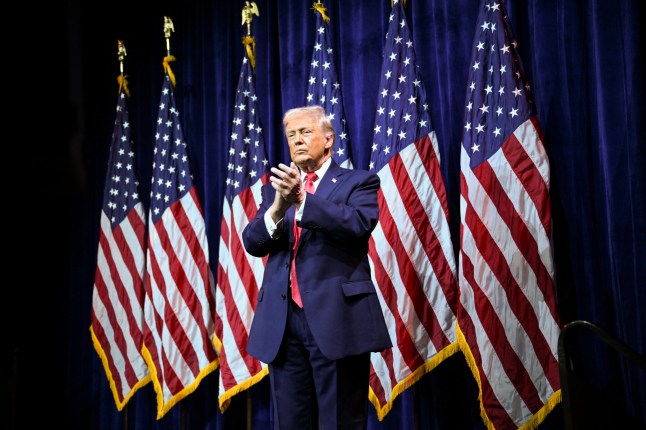
US President Donald Trump has his eyes set on taking control of the Danish territory. (Picture: Getty)
Read more from Craig in Metro’s politics newsletter Alright Gov? which delivers exclusive analysis and more to your inbox every week.
Believe it or not,we’re just a week into 2026 now. It already feels – to me,at least – like it’s lasted about four years.
It doesn’t feel great to be digging into matters of war,life and death this early in January. Some of that was foreseeable: for example,the mega Ukraine summit in Paris on Tuesday which ended with the UK and France committing to send troops over in the event of a peace deal with Russia.
Other bits were… less foreseeable.
Donald Trump’s capture of Venezuelan leader Nicolas Maduro and subsequent rhetoric about seizing control of Greenland has forced Europeans to consider questions they really,really didn’t want to consider.
Questions like,would the US President actually send his armed forces over to wrest control of the world’s biggest island from a Nato ally? And,what does Nato even look like if the US was to forfeit its membership of the alliance so flamboyantly?
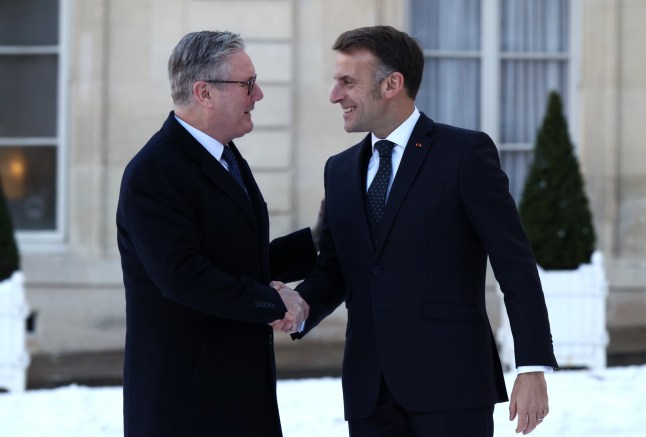
The PM was in Paris on Tuesday to discuss military support for Ukraine. (Picture: Getty)
Yesterday,Reuters reported that Germany and France were making plans for how to respond if Trump did indeed send his Chinooks to Nuuk. After PMQs,a government spokesperson wouldn’t say if the UK was doing the same.
There’s an awful lot at stake for Keir Starmer. He’s spent the last 18 months insisting there’s no need to take a side between Europe and the US – but such an eventuality would mean he would,in a chillingly literal sense.
I called up a couple of international security experts to ask what they think will happen next,and how the UK would react if the unthinkable came to pass.
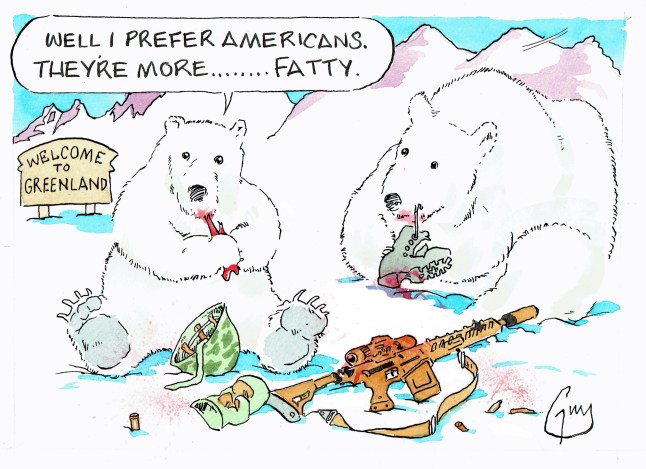
To be clear,this is not what international security experts think will happen next. (Picture: Guy Venables)
Benjamin Martill,an associate director at Edinburgh University’s Europa Institute,told me European leaders have been left in the lurch by the events of the past few days.
‘I think nobody quite saw this happening,’ he said. ‘And I think there’s lots of reasons why the Europeans haven’t stepped up [to avoid becoming so dependent].
‘Firstly,that they didn’t want to,secondly,that they didn’t really believe the US would ever really pull the plug.’
He continued: ‘The best that Europe can do at the moment,and the UK is probably going to be sympathetic towards this,is start very quickly to try to build those structures and build that kind of level of activeness in cooperation with European allies. But to do so very visibly,in a way that says to the US administration,“The price of this is you lose us.”’
I agree to receive newsletters from Metro
I agree to receive newsletters from Metro
Sign UpSign Up
This site is protected by reCAPTCHA and the Google Privacy Policy and Terms of Service apply. Your information will be used in line with our Privacy Policy
Dr Patrick Bury,a former Nato analyst and British Army captain who now lectures at the University of Bath,was more phlegmatic about Trump’s Arctic threats.
He said: ‘Of course,the European powers have freaked out a little bit by the statement,and it’s unpredictable. It’s unclear. I get all that,but I think what [the US is] signalling is,there needs to be a resolution here that accommodates our interests.’
What are those interests? Well,take a look at a globe. Any intercontinental ballistic missiles fired from western Russia aimed at the US would pass over Greenland,so it’s important the air defences are up to snuff.
Washington has concerns that Denmark’s boost in defence spending for the region might be too little,too late – and that Greenland’s population may vote for independence one day,as polls suggest.
Trump,Dr Bury suggested,was in a moment of maximum leverage after his Maduro showpiece and decided to push for something else he wants. That may be as simple as a ‘power-sharing agreement,something where they have a say’ over the island.
As for the UK,our help in seizing a Venezuelan tanker in the north Atlantic suggests we’re not quite willing to split up with the US yet.

United News - unews.co.za