
Blue dogs have been spotted prowling around Chernobyl like some kind of mutant,radioactive super-canines.
But what actually caused their bright blue colouring?
Dr Jennifer Betz and her team from the Clean Futures Fund believe they know why.
They filmed three of the feral dogs as they scavenged through the woodland last month near Pripyat,the town that was abandoned after the 1986 nuclear disaster.
Dr Betz said: ‘The last day we were there,we were able to see them from far off in the distance. The blue colour had been dissipating.’
That footage went viral and the descendants of abandoned dogs became famous on the Dogs of Chernobyl TikTok page.
Many expressed concern,but Dr Betz is not worried in the slightest and the answer is actually very mundane.
She said: ‘Obviously they’ve rolled in something.’
She believes the dogs rolled in a blue chemical liquid that had leaked out of a nearby broken portable toilet,which is non-toxic to humans.
Dr Betz said: ‘My dog gets into the burn pile,and her whole head is black when she comes out. So they roll on things,and they roll in nasty things.’
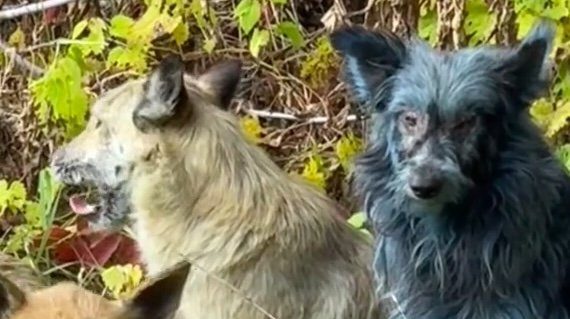
One animal was filmed looking completely blue,next to other dogs which still had natural fur colouring (Picture: Jam Press/@dogsofchernobyl)
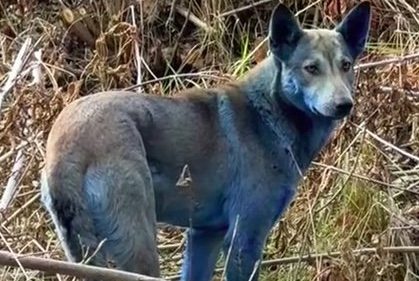
The footage was watched by hundreds of thousands online (Picture: Jam Press/@dogsofchernobyl)
Around 500 stray dogs live at the disaster site,referred to as the exclusion zone,bonding with local clean-up crews and power plant workers who often feed them.
After the disaster at the Chernobyl nuclear power plant,hundreds of families were forced to evacuate,leaving behind their homes – and pets.
Though local officials spent years trying to exterminate them due to concern about disease and radiation contamination,the offspring of people’s pets have thrived.
Nearly half of the dogs live in the immediate vicinity of the power plant,while the others live in Chernobyl City,a residential area nine miles away.
Dogs of Chernobyl,which relies on donations,has neutered some 1,000 dogs and cats since volunteers arrived at the site in 2017. Three clinics run by Clean Futures Fund also provide veterinary care and vaccines.
Some scientists see the zone as a lab to see how chronic,low-level radiation impacts the animals.
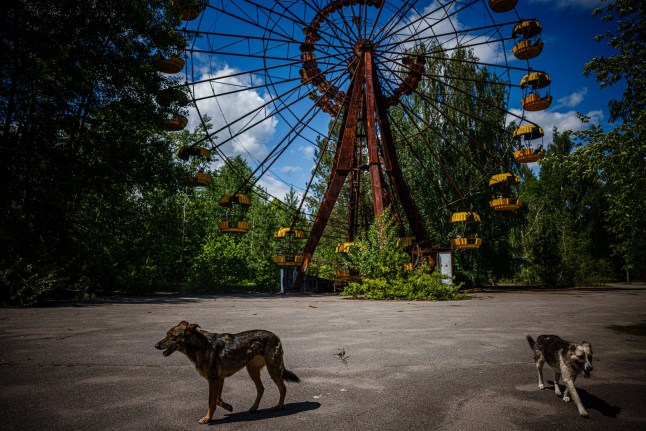
Packs of dogs also live in the ghost town of Pripyat near the Chernobyl Nuclear Power Plant (Picture: AFP/Getty Images)
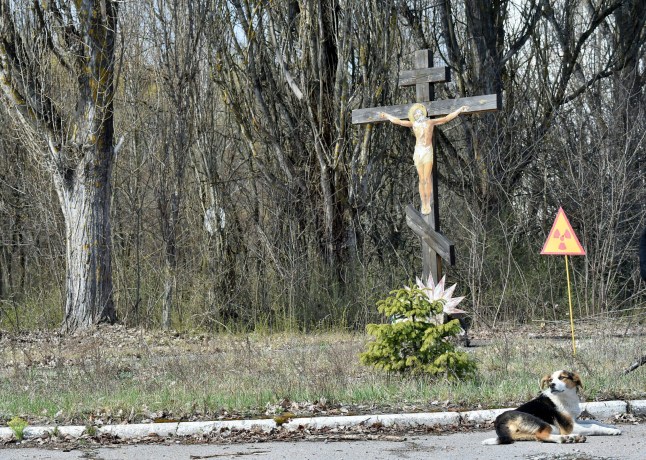
The dogs can serve as a real-life laboratory experiments to understand the impact of chronic,long-term radiation exposure (Picture: AFP/Getty Images)
Research has shown that the dogs of Chernobyl are genetically distinct from purebred canines. However,how much the radioactive environment has contributed to their unique genes remains unclear.
This isn’t quite the four-headed,cancer-immune dogs that people expect to see in the zone.
‘There’s a fascination with Chernobyl and radiation,’ said Dr Betz,who has co-published several research papers on Chernobyl’s dogs.
‘Spider-Man turns after being bitten by a radioactive spider. People want to believe that kind of craziness.
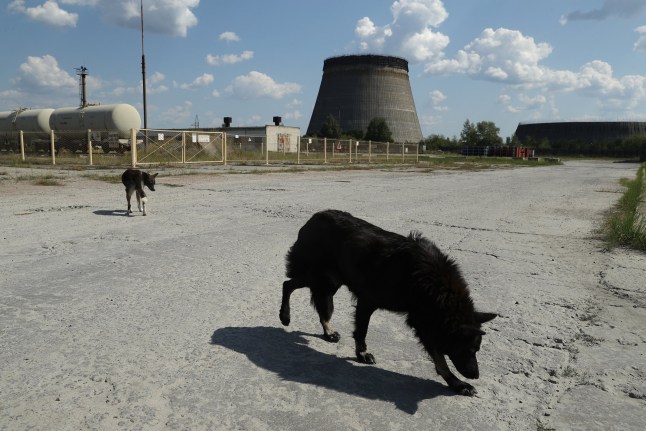
The dogs of Chernobyl do not have four heads,Dr Betz said (Picture: Getty Images Europe)
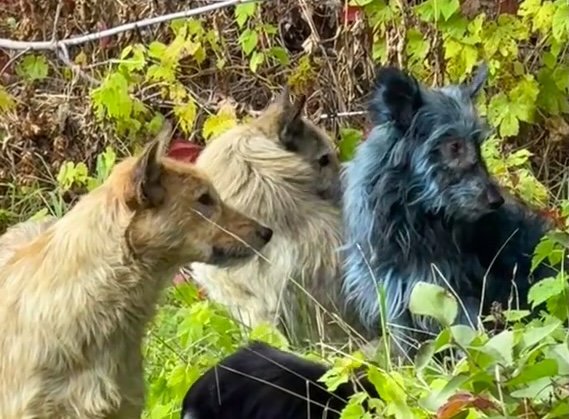
The virality of the footage,Dr Betz said,was because of the world’s ‘fascination’ with Chernobyl (Picture: Jam Press/@dogsofchernobyl)
‘So,the fact that they saw a blue dog,they immediately assume that instead of the obvious. Could have been a yellow dog,but blue,for some reason,people see and think radiation.’
Many of the dogs in Chernobyl struggle with birth defects,such as hip dysplasia,which means hip joints are misaligned and unstable.
The reason isn’t radiation,Dr Betz stresses,but inbreeding. Security barriers around the power plant may keep the power plant dogs and the Chernobyl City dogs apart,for one.
‘These are an isolated group of dogs that have been breeding mother to father,daughter to father,for 40 years,’ she adds.
It’s not only dogs that roam Chernobyl – wolves,boars,birds,deer,lynx and the once nearly extinct Przewalski’s horse have been spotted.
@dogsofchernobyl Every once in a while,we spot some Przewalski’s Horses in the Chornobyl zone. This particular day we got extremely close and were able to admire their beauty. #przewalski#dogs#horse#amazing#beauty
♬ original sound – DogsofChernobyl
Chronic radiation has affected some critters. Wolves are more resilient to cancer,birds have smaller brains in the area and frogs have darker skin to protect against radiation.
Given the short life spans of many of these creatures,dogs included,further investigation of radiation-related changes is needed.
As World War Three fears grow,such data would be just as useful for humans as it would be for animals,too,said Dr Betz.
She added: ‘What is it going to mean for people in the future should we have another accident like Chernobyl?’
On the need for more research,Dr Betz said: ‘With what’s happening in the world right now,we can learn from these animals by what we find.’

United News - unews.co.za